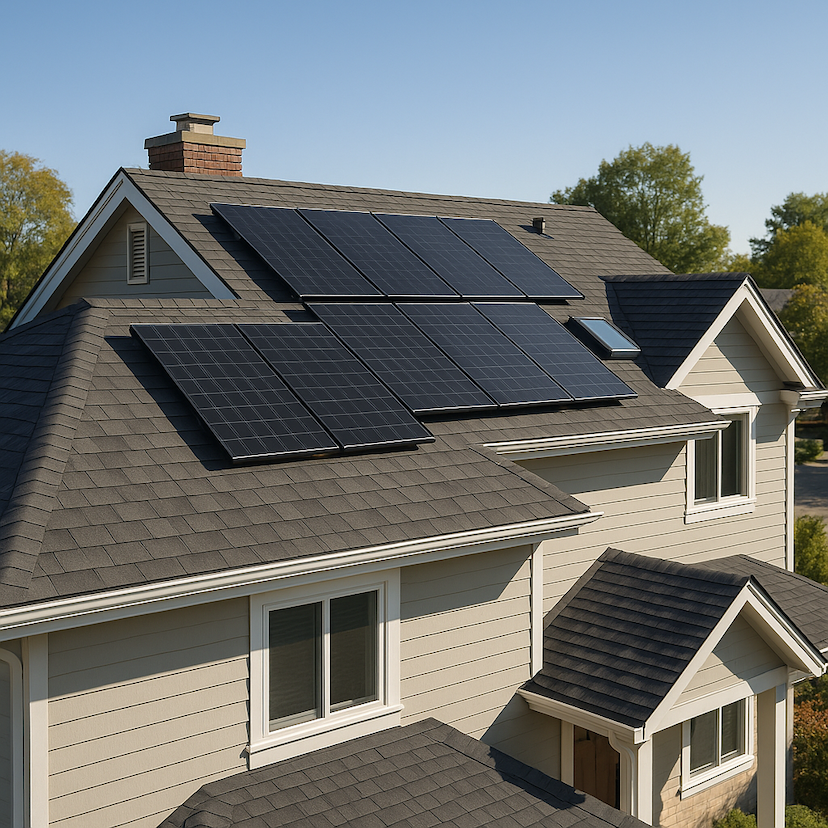
A precise solar site survey is the backbone of every profitable PV installation. Done right, it eliminates redesigns, failed permits and surprise change orders. With modern imaging, software and AI, you can capture roof, shade and electrical details remotely, qualify faster and close more deals with fewer truck rolls.
Essentials of a PV site survey
A solar site survey is the structured collection of property data used to design, engineer and permit a safe and productive solar PV system. For a site survey for solar PV installation you document roof geometry and condition, azimuth and tilt, shading and obstructions, structural particulars, electrical service and preferred equipment locations. The outcome is accurate inputs for layout, production modeling and interconnection, plus photos and notes a plan reviewer will accept. Solar surveys apply to residential, commercial and ground mount sites alike. Whether you run an on-site solar panel site survey or a remote solar power site survey, consistency and documentation quality determine success.
How to do a solar panel site survey step by step
For a deeper walkthrough and preparation checklist, see our
solar site inspection guide.
- Pre-qualify remotely - review address data, satellite imagery and local zoning to avoid dead-end visits.
- Capture roof details - measure footprint, tilt, azimuth and usable areas, noting vents, skylights and set-backs.
- Assess roof condition - look for aging, leaks or soft spots and confirm material and remaining life.
- Document shading - identify nearby trees, buildings and seasonal shade with photos and notes or a shade analysis tool.
- Check structure - rafter spacing, truss type, decking thickness and load paths relevant to mounting.
- Inspect electrical service panel - main rating, available breaker spaces, busbar limits, existing loads and grounding.
- Plan equipment locations - inverters, combiner, batteries and conduit runs with code-compliant clearances.
- Record utility and permitting needs - interconnection method, meter location and local requirements.
- Finalize deliverables - photos, measurements and a clear sketch that design and permitting can trust.
Remote vs on-site solar site survey
- Speed and cost: Remote surveys cut scheduling delays and truck rolls, often enabling same-day proposals.
- Accuracy: On-site can validate structural and panel details; remote can match or exceed accuracy when you use high-quality imagery, LiDAR and standardized photo capture.
- Risk: Remote reduces safety exposure on roofs; on-site is still best when access is complex or roofs are near end-of-life.
- Best practice: Lead with remote pre-qualification, then reserve on-site visits for edge cases or final verification when required by AHJs or utilities.
Solar site survey tools that raise accuracy
- Solar design software - 3D modeling, shade analysis, energy yield and code-aware layouts that turn raw inputs into buildable designs.
- Drones and imaging - orthomosaic photos and thermal payloads to map roofs, find hot spots and speed measurements on large or complex sites.
- LiDAR, GIS and satellite data - elevation models, parcel boundaries and tree heights to improve remote shading and setback checks.
- Mobile capture and checklists - guided forms that standardize photos, notes and measurements across your team.
Qualified solar PV survey checklist
- Site info - address, utility, rate, service type and meter location.
- Roof geometry - dimensions, tilt, azimuth and usable zones.
- Obstructions - vents, chimneys, skylights, parapets and required clearances.
- Shading - sources, seasons, photos and notes.
- Structure - rafter spacing, truss or joist type, decking thickness.
- Roof condition - material, age and estimated remaining life.
- Electrical - main breaker, busbar rating, spaces, grounding and bonding.
- Equipment locations - inverters, batteries, disconnects and conduit paths.
- Interconnection - backfeed limits, line-side vs load-side, upgrade needs.
- Permitting - AHJ notes, setbacks, fire code and HOA requirements.
Make surveys remote-first with Enervio
Enervio turns your qualified solar survey into a 5-minute, remote workflow. Your reps and customers collaborate through a simple web interface that captures property details, runs AI education, builds simulations and 3D visualizations, then generates 1-click quotes without a site visit. Integrate with your stack, eliminate manual rework and reserve on-site checks for only the edge cases. Try Enervio free for 15 days to cut costs and convert faster worldwide.
FAQs
What is a site survey for solar?
It is the structured collection of site, structural, shading and electrical data needed to design, engineer and permit a safe, code-compliant solar PV system. The deliverable feeds layout, production modeling and interconnection.
How much does a solar site survey cost?
Costs vary by region and scope. Residential on-site surveys commonly range from a few hundred dollars, while commercial or ground mount projects can run higher. Many installers bundle survey costs into project pricing. Remote surveys reduce labor and travel. For a detailed breakdown, see our
cost of a solar site survey.
How to do a solar survey?
Pre-qualify remotely, capture roof geometry and condition, document shading and obstructions, verify structure, inspect the service panel, plan equipment locations, and record utility and permitting requirements with standardized photos and notes.
How much do solar site surveyors make?
Compensation varies by country, experience and employer. In the United States, roles typically span from entry-level technician pay to higher salaries for experienced surveyors or leads, with overtime and travel often affecting totals.